Wednesday, August 14, 2013

What makes a great film?

 Give me at least 3 attributes with examples for each and of course include screen shots were applicable!!!

awwwww snap. 

     Oh no! It's that time of year again where film students come together to write fascinating blog posts. We rise to the occasion and begin our daunting challenge with the question: what substitutes as a great film?      I'm a firm believer in focusing on a selective genre and sticking to it throughout the film. I've chosen to do romantic comedies because I really enjoy making people laugh as well as creating suspense and twists within the context of a plot. That certainly can't be applied in certain genres in the genre spectrum. I've see lots of student films  and all of them have done well to attach itself solely to one or two genres. For every film, it is important to apply genre research before starting pre-production on the movie. Here's an example of a thriller horror entitled "Pandemic" which was the gruesome tale of 4 college students students being attacked by seagulls. 
HANGERS!!!!
What went wrong in this film was that I didn't understand if I was supposed to be afraid or find the whole scenario crazy hilarious. For goodness sake they're fighting birds with hangers (the weapon of champions) with distracting bird squawking loops.  Had they done a little research before on thrillers and maybe take the time to find a creature that spooks the audience, develop a soundtrack to create suspense, and incorporate more shot variety than maybe the film could have been salvage. It's always important to take note of the conventions of a genre before starting anything else.

      In addition I did mention in the previous paragraph how essential the proper usage of music is within a film. Sometimes music makes the film as you can probably see in musicals, Disney films, revenge thrillers, action films, and other countless genres that use digetic and non-digetic sounds to add a specific tone to the film. Take for instance this mash-up video of Psycho featuring the infamous murder with and without music. You'll obviously notice how when the music is added you can get a sense of dread, fear, and anxiety when you hear throse shrilling noises . In comparison to the other scene where you only hear the screams it seems rather lacking. In itself. The scene is actually so well done that it could be made with or without music and still look scary; however, the mixture of discordant violins and pure screams of terror create a beautiful combination in art of horror films. 

Finally I would like to take the time to acknowledge my sort of biases right now, call me sentimental person but I love movies that make you ponder even after the movie itself is over with. I want to feel that emotional impact so hard that I fall to ground and cry. Okay maybe not to that extent but I am definitely looking for a movie that has some deeper theme underneath all of it. For example let's consider "Enchanted" and the scene where the main character finally realizes she is in love with the wrong person. The entire story builds up from the beginning hinting that Jazelle must find someone "who must sing to her" and that they would be her only true love.
I just love her face: a mix of sadness and regret. 
After being transported into New York she manages to find her prince and grows unhappy with him. In the scene where Dempsy sings into her ear within the song, it's just a little subtle clue to the ending of the story. How she realizes that he is her one true love, and that's what I love about cute animated films sometimes. They find a motif and expand upon it until it becomes something much more symbolic by the end. 

Wednesday, May 22, 2013

End of Year "Reflection"


https://www.savvymoney.com/debt-blog/wp-content/uploads/2013/01/Long-Haul.jpg

It's time to end up my contributions this year. I won't forget how fun Junior Year IB FILM was...mainly because i'll be doing a reflection of it right now. lol.
  • Independent Film Research:
    My strengths in this research Script was my knowledge of the films and a proper background research behind the works. I felt because I had a lot to analyze about the movies there was never a dull moment in my actual script. The only problem that I saw with my script was that there were times when I looked like I had no way to connect it back to a general theme. For example both films did discuss crime but both were conveying different perspectives about politics and society. In the future I'd look to do more research on how to create a really good introduction to the script and maybe a practice one before we actually make a legitimate one. As far as areas I need help I know that my conclusion was rather weak because I had already restated a lot of the analysis throughout the script. When it came to conclusion I wanted to bring up a new "oh wow. all of this comes together to symbolize ..." yet it was to no avail. When the time comes next year I warn myself to start the script at least 2 week prior. or maybe 1 week and to not be afraid and ask Bigue for some critique.

  • Oral Presentation Experience:
    Well when Mr. Bigue looked over my oral he said not be so hard on myself and that I actually did a superb job considering it was my second time through. I know that I had a really good understanding of the film because we had discussed it in class, and i feel that my focuses were really strong and well addressed throughout the oral. Next time I definitely need time to rehearse and practice my IOP before so i can get a feel of what I'm doing and not just wing it the day of. Because I know very well I wouldn't get a very good grade if that happened. Next time around I'd be wary to create a structure that allows me to talk about each category for a selected amount of time and organize it so that it doesn't inter lap with other topics. In my presentation I felt myself repeating the same evidence over and over.

  • Production Experience:
    So for as long as I've been in IB FILM I had always been the director. I honestly thought well I'm not really that good at any of the technical stuff and I'm pretty creative and efficient at ordering people and organizing events. Now that I think about it I did get in a few arguments. "oh so you're a director? so you just sit around and boss people around?" Yes, but only because I had put in all the effort with scripting and treatments and pitching so now it's your time to step up no matter how "simple" or "mundane" your task is. Anyways i felt like I got irritated with always being bagged on as director so i switched roles a bit and accepted the role as sound designer. That I felt I was extraordinarily great at because I could actually like help in the production of the movie. However; that meant me having to trust other people to direct and finish treatments and script on time. TO be honest, we didn't even complete or follow the script the last days of filming. So here's my advice: group up with people who share the same common interest, group up with people willing to contribute equally, and most importantly understand what your SOLE AND DIRECT role is in the production. DO NOT be doing other people a favor by picking up their slack. See you next year!

Independent Research Script Reflection


  • Clear references to film history, theory or genre topic.
     Looking back at the assignment now I see that I did take account of the history and genre of both films. Luckily for me, I wanted to focus on the genre of "Crime-films" and other conventions that were involved in the genre. Brother was an amazing film not only because of the story but for the reason that I could pull out so many similarities with City of God. In a certain focus for the independent research film I wanted to shed light on the topic of "why we believe cry doesn't pay". In order to highlight these topics I specifically focused on the film history in particular cultural conventions. For exampled I had never considered the cultural limitations of Russian cinematography during the Cold War in comparison to the financial issues in Brazil's favelas.

  • Clear engagement with the target audience, scope and depth of argument
     In order to be creative with my Independent Research we all were placed in the parameters that we were actually writing a two-column script for a documentary. Of course I'm very happy to express myself and I decided to engage the audience with an elaborate opening in the introduction to my topic. I started off with a real-life situation and paused the time to analyze their situation and reference back to the other 2 films. My argument in the beginning were how directors Balelenov and Meirelles were able to express socio-cultural problems through the the mediums of cinematography, editing, and characterization. I felt that I did a pretty decent job exploring all three of the categories but looking back on it now I see that i wasn't answering an argument more so addressing an already known fact. Had i changed the question maybe I would've created better analysis of both films. The audience however would never be bored because I harness both visuals and audio to keep the audience involved. I would use clips from the movie, as well as demonstrate side-by-side their similarities in order to convey a deeper meaning.

  • Clear  use of sources and structure of the script.
    The structure of the script was broken down into the sequence of side by side comparisons followed by analysis of the symbolism behind the clips used. For example I analyzed the power of crime and the expression of hope that comes from it by comparing both the character of Lil Ze' and Danilla. I would use extracts from the film that would essentially show a transformation in their character. The structure would not only focus on characterization of evidence for my claim though. In my research I brought in quotes form articles i had read from Mr. Bigue. For example to explain how the editing style was affected by genre I brought in "Cinema Novo" as well as the effects of the Cold War in Russia. The articles I read from Mr. Bigue's homework were really helpful in fortifying my argument and supplemental as for the socio-cultural aspect of both films.

  • Video and audio elements are detailed clearly and coherently described and linked.
    Looking back on the visual column of the script I found myself using it as an aid for my comparisons between both of the films. I used a lot of the important clips to address these comparisons: Just like when Lil Ze' got shot compared to the scene where Danilla gets shot in the movie. I feel like I should have incorporated the use of sound in the analysis of the post-editing. For example I wanted to discuss the symbolism of the music in both the films but it was difficult finding sound analysis for two foreign films. It would probably have been more helpful to find better scenes to relate to but I think they succeeded in getting my point across. Sometimes I just threw in freeze frames of characters but I thought it would've been nice to have a collective shot that brought it all back together.

  • All films referred to clearly relate to the topic and insightful comparisons are made with precision.

    YES! Luckily for me, both of the films were in the same genre and conveyed similar themes: corruption in higher politics, freedom expressed through violence, and much more. I actually enjoyed watching both films not because of how impacting their films were but to uncover the director's intent in the production of the film. For example i learned that Meirelles worked with a low budget and an inexperienced cast but it brought the reliability of life in the favelas and made it a successful Realism-based film. The other film director wanted to express how corrupt life was in post-cold-war Russia and showed it through the increase in violence. Had the films not been the same genre it would've been more difficult and I'll take that into consideration when I do this again next year.

Tuesday, April 30, 2013

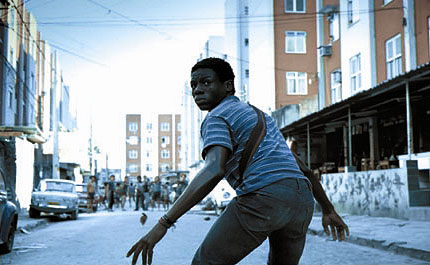
Brazilian Cinema "City of God"


THE BELA ÉPOCA

The start of cinema could not have been better timed, because the entire republic of Brazil was thrown into a massive progression of industrializing, urbanization, and a diverging cultural experience spread through immigration. At the top of all the progress lay the very first Brazilian film artists who created the pioneering era of "Bela Epoca" (where brilliancy films dominated the market and where fictional films were becoming a staple through the use of different genres being exploited. (historical drama, melodrama, comedy, satirical plots, and etc.) However, the small staggering economy found fault with the lack of technology and competition from competing industries. The Brazilian film industry suffered because they were emulating European/American Films and had no technology or technical expertise in the art. Furthermore, the film industry's infrastructure was dependent on the upper class who had the time and finances to enjoy the movies. Ultimately it would be the Hollywood scene that would break international barriers and influence Brazilian cinema. 

CHANCHADAS: A FILM INDUSTRYFOR A NATIONAL CINEMA

Sound was a godsend for progression in Latin American filming industries. Right after the Great Depression, Hollywood was used a weapon for propaganda and this was quickly mimicked by Getulo Vargas Estado Novo. He implemented authoritarian ideals and declared that the cinema industry was to be funded by the state in order to support nationality and cultural symbols. Soon a unique Brazillian genre came out called the "chanchada" which entailed musical comedies but rooted in the Brazillian theater (carnivals, dances, fiestas). It can be said WWII played an effective role in slowing down the film industry and therefore the new film company called "atlantida" emphasized Realism in their movies. The culture from then became more rich and diverse that soon gave rise to the idea of a Brazilian Hollywood... which ultimately was a failure because of such high and costly ambitions.

********************************************************************************

 
The article Mr. Bigue posted was really helpful when it came to a more exploitative and informing analysis of the film City of God and the significant themes and ideas expressed. The article was quite a lengthy read but it wasn't unbearable because it broke down parts of the story and discussed cinematography, characterization  editing techniques, and most importantly conveyed important reflections of society and culture. The target audience for this film are those in their young adulthood, what can be said about this generation is that they are unaware of other traditions and belief outside their own culture. An important proponent to consider is how realism is used to express the savagery and epitome of life in the favelas. Favelas are in other words referred to as slums or hovels, in which most cases people stoop to low levels and resort to crime, drugs, and violence as a way to survive. Realism in the City of God is not meant to highlight solely the injustices of the favelas but critique the policies of governments outside the slums and bring out harsh truths in reality.

One of which is the role of machismo in the story and an important cultural tradition in most Latin American countries (especially Brazil, the place where the movie takes place). Machismo is the term used for tough rugged men who are manly and dominant, unfortunately this is often interpreted as males with a history of strength and power who at most times use their power to dominate and control women. The concept of being "macho" is significant throughout the three arcs in the story. It gives rise to this idea of an endless cycle of hatred which is reborn in each and every generation in the City of God. This is seen through the characterization of Lil Ze and Rocket. Lil Ze is a symbol for hopelessness and despair in such ares of the slums. He found himself drowned in power and he sold his soul to become an evil and powerful crimelord. What he did not account for was how ironic it would be that growing up murdering people would be his way of death. Just as the young generation murder him, and continue the ongoing cycle of hatred and violence. Shining light on the bad situations many people live in, but to where there is despair hope can be found in the character of Rocket.

Rocket is the key inspiration for people living in the slums, and how he rises from working in a supermarket to becoming a journalist in a large city. His passion, and his desire to succeed and make a name for himself out of crime is admirable. However, he is actually very far from a hero. Unlike most heroes that find some form of acceptance or gratitude for doing good deeds, Rocket knows the risks of being caught. He knows that being a good person does not get it's rewards, and in the city of god it's all about having connections and not being caught in gangs. This sheds light on the hopes of escape that realistically many people living in the slums do. Some see escape through sports as shown in the begnning of the film, through wealth which is apparent through the robberies and violence, through different cultures like how Benny was influenced by Western society and wanted to escape his thug life, and in Rocket's case how he finds escape through opportunity in his hobby of photography. 

Friday, April 26, 2013

City of God(notes)


Please read and summarize the article on Portrayal of Violence in City of God.
Pay attention to the references of filmic technique/theory the author uses to validate her claims: Narrative, Cinematography, Edit, Genre, etc.
Include a minimum of 5 quotes with rationale/commentary for selection.
I. Notes (how the story is told )
A. Narrative
“The film places the viewer in a removed spectatorship, suggesting a sense of
omniscience and control which proves, in the end, false.”
1. touches base with multiple narratives such as Psycho, Vantage Point. Rocket, is the observer in the favela and he sees his perception of the events that took place in the city of god, brazil. this is signifgant because it adds to the suspsense and how the audience feels that the storyline is swaying to a certain way but is inevitibly going in another direction.
2. emphasizing threats/problems in Brazil (corruption, gangs, drugs)


B.Cinematography (shots/scene/setting)
the film uses mainly amateur actors, location shooting, and
handheld camera work to convey a sense of realism.
Meirelles has discussed the film as a criticism not only of
Brazilian society, but global economic forces, saying that
"no country is as unfair as the world itself."
1.A step away from large Holywood productions in order to capture the essence and struggles of the people of the city of god. As far as realism is concerned the film does well to incorporate conventions and techniques execute in Realism. ( look on mr. bigue’s site for help)


C.Edit (background history on edit)
“The audience sees bodies falling, or lying on the ground, but
the editing is rapid and generally cuts immediately away.
The audience doesn't see the blood or tearing of flesh that
we assume must accompany events. “
What truly makes the film a work of art is how much a message is conveyed, or implied without the direct correlation through shots. There are times in the story where it would have been nice to see it, but the fact is because we didn’t see it leaves much more room for assumption and interpretation. Often having the audience using their own perceptions to pull the pieces together. one scene was the rape scene, which was executed as not too distasteful but a pivoting moment in the plot.

“The editing of the sequence suggests not
only that Rocket survives by 'shooting' the others, but that
he is directly responsible for the deaths of those shot by
real bullets“
Covers the idea of responsibility and bystanderism. the shooting is meaningful of taking the photos instead of not actually helping people. He is responsible of the death because he chooses to use the photos as a way of branching out in his journalism career. Exploiting the gang, and using them but ultimately had he got involved he would have suffered the same fate as most of the gang members.

D. Genre (conventions/ unique/ why / attacking topics like)
“ Brazil's contemporary national cinema frequently deals with an
"…urban reality that is centered in the concept of the 'taken
for granted' violence that comes out of a predatory
capitalism and so becomes a spectacle."
In other words, it talks about the violence and loss of innocence through developments in capitalism. the irony of how the society at the time deals with the beautiful country of Brazil paved in success, but within it are these villages with hovels and a large majority live here.

Monday, February 18, 2013

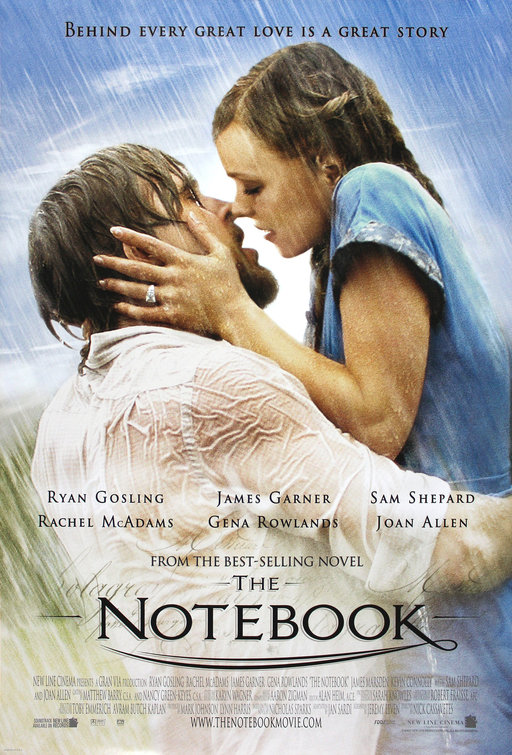
the notebook - genre assignment


For the past few years I’ve always been dealing with romantic comedies as my main focused genre. I don’t know why I’m choosing to distance myself from what I love but I believe I need to focus on what I’ve been trying to make all along. A really heartfelt film that will capture any woman’s (and man’s I suppose) heart. That’s why for my short film I’d like to focus more on the genre of drama.
As for films I’ll be focusing mainly on the notebook.
As far as narrative goes, they are the quintessential backbone of any good drama. The art of making a successful narrative is the director’s efficiency in portraying a certain emotion. For example when Allie confronts Noah about him having not wrote her back in 7 years the audience can get a sense of her pain and sorrow. He replies by saying that he had wrote her every day but the letters never reached her because Allie’s parents intercepted them beforehand. The purpose of any dramatic story line is to move the audience emotionally and to propel the plot further. Themes may be expressed but are all based in reality because the story reveals real life scenarios with real characters, setting, and ideas.

Acting is of course important to every film and in drama it’s really the professionalism of the actor that sells the concept. Most dramas deal with self-renewal and exemplify the lone journey of a character’s development through personal interactions with other characters. This could go back to the “hero’s journey” as the protagonist triumphs over the sources of evil and learns from their revelation.  
Production design is a significant convention in dramas. Ever since the beginnings of early Holywood films dramas have involved lavish and elaborate set design. The entire story of The Notebook takes part in 3 time periods: current day, when the characters were teenagers, and when they were young adults. By having three different times the setting had to constantly change within context of the time frame. Not only that, in order to create more conflict in the story often the setting would reveal a large part of the emotional aspect in the scene…Such as the kissing scene in the film.

The sound design, in my opinion, was what made the film. Grab the tissues, hold down the sniffles, because an important convention in drama is where it breaks the cliché happy ending and gives off a bitter sweet conclusion that makes the audience cry rivers of tears.

In the scene as Allie begins to remember Noah, despite her advanced state of Alzheimers, a soft and subtle piece plays in the background. Had it not been this slow sad piano song the sorrow expressed by the actors wouldn't have been expressed. Considering that this was the last time the character recited their love for each other it shows it wouldn’t make sense to have a dubstep or happy song playing. Most dramas deal with large orchestral symphonies or classical scores within the film.


Log Line: Katherine, a shy young girl who wears a paper bag on her head, struggles to accept herself and to win the heart of her long-time crush. 

Tuesday, February 12, 2013

Psycho Oral Commentary


Evaluation of my presentation:
 22/25


"I am the best. i deserve the best and that's why i gave myself the highest grade in the whole grading IB rubric," said the pompous Kim in an alternate timeline. Truth be told, I had a lot of experience from previous art of video commentaries and I was disheartened that I only did marginally better this year. There were major issues that i docked myself points for including:

1) being unprepared for the commentary. I had finished my outline and had a pretty strong understanding considering I spent a lot of times on the blog posts. I feel as if i didn't have the paper with me I'd do rather poorly but I had hoped that i wouldn't need to keep looking constantly at the paper. Sometime's I'd lose focus and stutter when transitioning from topic to topic

2) There were issues with my surroundings and me being completely distracted by these "digetic" noises. There were birds deciding to critique me halfway in the presentation. Also cars and people would pass and I'd do my best to suppress the noises with louder analysis. Plus I had Mr. Ryan Marquez presenting a couple feet and you would hear his voice in my oral. As well I would constantly be comparing myself to him which made me worry over the presentation and mess up. 

3) My cover of the narrative in the oral. I had talked about every single area within the outline but 2 minutes into the end I recalled that i didn't actually cover the topic. I included little facts and tidbits about narrative but I didn't analyze the significance of the story in relevance to the general audience. Which really sucked because I felt like i really knew what to talk about. 


Concluding my review I feel I had focused very much on all the influences and cinematography but struggled to relate it back to the historical signifigance. I feel I did rather well and with a little more time to practice I would've graded myself a bit more leniently.